
Our Team of Investigators
Leading experts from our partner institutions.
University of Florida
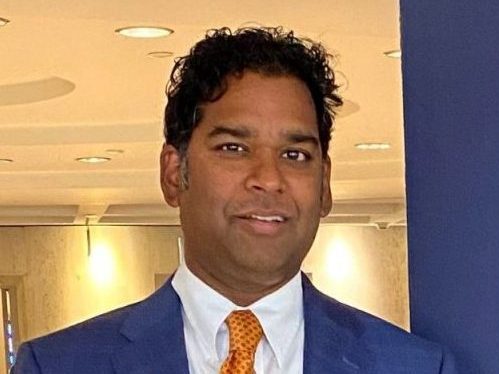
Dr. Kevin Butler
UF Research Foundation Professor, Director of the Florida Institute for Cybersecurity (FICS) Research, Department of Computer Information Science Engineering (CISE)
Email: butler@ufl.edu
Bio
Dr. Kevin Butler is the UF Research Foundation Professor and Director of the Florida Institute for Cybersecurity Research (FICS Research), as well as Director of the Center for Privacy and Security for Marginalized and Vulnerable Populations in the Department of Computer & Information Science & Engineering at the University of Florida. His work focuses on advancing the security, privacy, and trustworthiness of computing systems across devices, networks, and critical digital infrastructure.
As part of the PRISM Center, Dr. Butler investigates how security and privacy challenges disproportionately impact vulnerable and underserved populations, and how technical interventions can better support equitable protection in digital environments. His research spans secure provenance collection, analysis of peripheral and device-level threats, secure Internet routing, and the protection of mobile and embedded systems.
Dr. Butler received a National Science Foundation CAREER Award in 2013 and was named International Educator of the Year within the Herbert Wertheim College of Engineering in 2017 for his work developing global standards for securing digital financial services in the developing world. From 2016–2021, he served as co-chair of the International Telecommunication Union’s Security, Infrastructure, and Trust Working Group within the Financial Inclusion Global Initiative. He holds a Ph.D. in Computer Science and Engineering from the Pennsylvania State University. His broader research provides rich opportunities for students and collaborators interested in cybersecurity, secure systems design, digital equity, and global technology policy.
Research Interests
Cybersecurity, Privacy Protection, Secure Systems Design, and Equitable Digital Security for Marginalized and Vulnerable Populations.
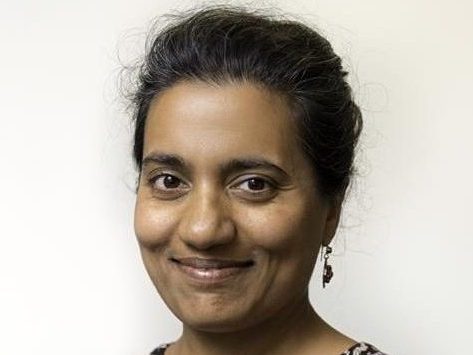
Dr. Eakta Jain
Associate Professor, Department of Computer & Information Science & Engineering
Email: ejain@ufl.edu
Bio
Dr. Eakta Jain is an Associate Professor in the Department of Computer & Information Science & Engineering at the University of Florida, where her work explores how people perceive and interact with digital systems. Her research bridges computer graphics, virtual and augmented reality, eye-tracking, and human–computer interaction, with a focus on building technology that models human behavior accurately and supports safe, equitable, and human-centered design.
As part of the PRISM Center, Dr. Jain investigates how visual perception, attention, and user modeling influence security, privacy, and fairness in interactive systems. Her work examines how computational tools, from VR environments to eye-tracking systems, can either mitigate or amplify bias depending on how they represent and interpret human behavior.
Dr. Jain serves as an Associate of Computing Machinery (ACM) Special Interest Group on Computer Graphics and Interactive Techniques (SIGGRAPH) Executive Committee Director, contributing to the leadership of one of the world’s largest and most influential communities in computer graphics and interactive technologies. SIGGRAPH Executive Committee, where she contributes to shaping global leadership in computer graphics and interactive techniques. She holds a Ph.D. and M.S. in Robotics from Carnegie Mellon University and previously worked in research roles at Disney Research Pittsburgh, Walt Disney Animation Studios, and Texas Instruments R&D Labs. Her broader research integrates visual perception, VR/AR/XR systems, behavior modeling, and human-robot interaction, creating rich opportunities for students and collaborators interested in the future of interactive technology, perception-aware computing, and responsible innovation.
Research Interests
Human-Centered Computing, Computer Graphics, and Interactive Systems

Dr. Patrick Traynor
Professor, John H. and Mary Lou Dasburg Preeminent Chair in Engineering, Interim Chair, Department of CISE; Cybersecurity and Trustworthy Systems Research
Email: traynor@ufl.edu
Bio
Dr. Patrick Traynor is the John H. and Mary Lou Dasburg Preeminent Chair in Engineering and currently serves as Interim Department Chair and Associate Chair for Research in the Department of Computer and Information Science and Engineering at the University of Florida. His research focuses on the security, privacy, and trustworthiness of computing systems, spanning mobile and cellular networks, voice driven systems, applied cryptography, and pervasive infrastructure, with a strong emphasis on real world impact.
As part of the PRISM Center, Dr. Traynor examines how security and privacy failures in mobile, networked, and critical systems disproportionately affect diverse and vulnerable populations, and how technical interventions can provide resilient and equitable protection at scale. His team has produced the first large scale measurements of mobile malware infections, uncovered critical vulnerabilities in cellular and mobile networks, developed some of the strongest detectors of deepfakes, and created protections for voice driven systems, including mechanisms to combat Caller ID fraud.
Dr. Traynor is deeply committed to translating research into practice. He has co founded Skim Reaper, CryptoDrop, and Pindrop Security, bringing academic innovations into deployed cybersecurity tools and services used in real world environments.
His work has received sustained national and international recognition, including a National Science Foundation CAREER Award, an Alfred P. Sloan Research Fellowship, fellowship with the Center for Financial Inclusion at Accion, and designation as a Kavli Fellow. He holds a PhD in Computer Science and Engineering from The Pennsylvania State University and has authored numerous influential publications advancing the state of secure and trustworthy systems.
Dr. Traynor’s interdisciplinary expertise supports high impact collaboration and student training in cybersecurity, network security, mobile systems protection, trustworthy computing, and systems design that serves diverse and vulnerable populations.
Research Interests
Cybersecurity, Mobile and Network Security, Privacy Protection, and Trustworthy Computing for Diverse and Connected Systems.
Indiana University Bloomington

Dr. Kurt Hugenberg
James H. Rudy Professor, Department of Psychological & Brain Sciences
Email: khugenb@iu.edu
Bio
Kurt Hugenberg is a social psychologist in the Department of Psychological & Brain Sciences whose work explores how social group beliefs shape human perception, judgment, and behavior. His work bridges psychology, technology design, and human–computer interaction, focusing on how cognitive and social biases influence decision-making in both people and automated systems.
As part of the PRISM Center, Dr. Hugenberg studies how designers’ assumptions about users can unintentionally introduce or amplify bias in digital technologies, including security workflows, face-recognition algorithms, and emerging AI tools. His team’s research helps identify design biases and develops evidence-based interventions to support more inclusive, equitable, and secure technology.
Dr. Hugenberg joined Indiana University in 2018 and previously served in editorial roles at leading journals such as the Journal of Personality and Social Psychology, the Journal of Experimental Social Psychology, and Social Psychological and Personality Science. His broader research interests include stereotyping and prejudice, intergroup relations, face perception, social categorization, and person construal, as well as psychological approaches to understanding bias in AI and machine-learning systems. These interdisciplinary strengths offer engaging opportunities for students and collaborators interested in social psychology, technology ethics, and responsible computing.
Research Interests
Social Psychology, Technology Bias, and Human–Computer Interaction.

Dr. Apu Kapadia
Associate Professor, CISE
Email: kapadia@iu.edu
Bio
Apu Kapadia is a Professor of Computer Science at the Luddy School of Informatics, Computing, and Engineering, Indiana University Bloomington. He is a cybersecurity researcher particularly interested in how humans interact with emerging technologies. His recent work is centered on security and privacy in the context wearable cameras and mixed reality technologies, especially when people with visual impairments use these technologies as assistive devices and children use them to interact with others in virtual spaces. With smart voice assistants gaining popularity, he is also exploring security and privacy issues in the context of speech-based interactions with these devices, especially with vulnerable populations such as children.
Apu Kapadia has received several NSF grants, including an NSF CAREER award in 2013, and two Google Research Awards in 2014 and 2020. He was a recipient of the Indiana University Trustees Teaching Award in 2013, the Dr. James E. Mumford Excellence in Extraordinary Teaching Award in 2021, and the Distinguished Alumni Educator Award from the Department of Computer Science at the University of Illinois at Urbana-Champaign in 2015. For the years 2015 and 2016, he was Program Co-Chair of the Privacy Enhancing Technologies Symposium (PETS) and Co-Editor-in-Chief of the associated journal Proceedings on Privacy Enhancing Technologies (PoPETs). In 2020 and 2021 he was Sub-Committee Co-Chair for Privacy & Security at the ACM CHI Conference. He is currently the General Chair of the Symposium on Usable Privacy and Security (2022-2024).
Research Interests: TBD
Georgetown University

Dr. Elissa M. Redmiles
Claire Luce Boothe Assistant Professor, Department of Computer Science, Georgetown University
Email: eredmiles@gmail.com
Bio
Dr. Elissa M. Redmiles is an Assistant Professor at Georgetown University in the Computer Science Department and a Faculty Associate at the Berkman Klein Center for Internet & Society at Harvard University. She was previously a faculty member at the Max Planck Institute for Software Systems and has additionally served as a consultant and researcher at multiple institutions, including Microsoft Research, Facebook, the World Bank, the Center for Democracy and Technology, and the Partnership on AI. Dr. Redmiles received her B.S. (Cum Laude), M.S. and Ph.D. in Computer Science — with a concentration in Survey Methodology — from the University of Maryland.
Dr. Redmiles uses computational, economic, and social science methods to understand users’ security, privacy, and online safety-related decision-making processes. Her work specifically investigates inequalities that arise in these processes in order to ultimately design systems that facilitate safety equitably across users. Dr. Redmiles current PRISM projects focus on ownership over intimate digital content, safety behaviors in digitally-mediated offline interactions, and developing programming to accelerate community-driven security and privacy research.
Dr. Redmiles’ research has been recognized with several industry and U.S. federal awards and has received Distinguished Paper Awards from premier computer science conferences such as USENIX Security and ACM’s Conferences on: Computers Communications and Security (CCS), Human Factors in Computing Systems (CHI), Computer Supported Cooperative Work (CSCW), and Equity and Access in Algorithms, Mechanisms, and Optimization (EEAMO). Dr. Redmiles’ research has also been featured in The New York Times, The Wall Street Journal, Wired, Scientific American, Forbes, Rolling Stone, and other international and cybersecurity-specific venues.
Research Interests: TBD
University of Washington

Dr. Tadayoshi Kohno
Professor, Paul G. Allen School of Computer Science & Engineering, University of Washington
Email: yoshi.kohno@georgetown.edu
Bio
Tadayoshi Kohno is the McDevitt Chair in Computer Science, Ethics, and Society and a Professor in the Department of Computer Science and the Center for Digital Ethics at Georgetown University. His research focuses on protecting the security, privacy, and safety of users of current and future technologies.
Kohno is a recipient of the Alfred P. Sloan Research Fellowship, the U.S. National Science Foundation CAREER Award, the MIT Technology Review TR35 Young Innovator Award, and the Golden Goose Award. He has received five Test of Time Awards, authored over a dozen award-winning papers, presented his research before the U.S. House of Representatives, and had his work featured in the NOVA ScienceNOW documentary “Can Science Stop Crime?” and the NOVA documentary “CyberWar Threat.” He is a past chair of the USENIX Security Symposium.
He is the co-author of Cryptography Engineering, co-editor of the anthology Telling Stories, and author of the novella Our Reality.
Previously, Kohno was a Professor in the Paul G. Allen School of Computer Science and Engineering at the University of Washington, where he co-directed the Computer Security and Privacy Research Lab and the Tech Policy Lab. He also served as Associate Director for Diversity, Equity, Inclusion, and Access in the Allen School and as Associate Dean for Faculty Success in the College of Engineering. Kohno received his Ph.D. from the University of California, San Diego, and his B.S. from the University of Colorado.
His research focuses on computer security and privacy, broadly defined.
Website: https://gufaculty360.georgetown.edu/s/contact/003UH00000ZmP3HYAV/yoshi-kohno

Dr. Franziska Roesner
Associate Professor, Paul G. Allen School of Computer Science & Engineering, University of Washington
Email: franzi@cs.washington.edu
Bio
Franziska Roesner is the Brett Helsel Professor in the Paul G. Allen School of Computer Science and Engineering at the University of Washington, where she co-directs the Security & Privacy Research Lab. Her research focuses broadly on computer security and privacy for end users of existing and emerging technologies.
Her work has examined online tracking and advertising, online trust and safety, security and privacy for marginalized and or vulnerable user groups, and security and privacy challenges in emerging platforms such as augmented reality and Internet of Things systems.
Roesner is the recipient of a Google Security and Privacy Research Award and a Google Research Scholar Award, a Consumer Reports Digital Lab Fellowship, an MIT Technology Review Innovators Under 35 Award, an Emerging Leader Alumni Award from the University of Texas at Austin, and a U.S. National Science Foundation CAREER Award. She has received paper awards or runners up at the USENIX Security Symposium, the IEEE Symposium on Security and Privacy, the Internet Measurement Conference, the Web Conference, the Annual Privacy Forum, and the CHI Conference on Human Factors in Computing Systems, as well as Test of Time Awards at NSDI, the IEEE Symposium on Security and Privacy, and USENIX Security.
She currently serves on the USENIX Security steering committee and has previously co chaired both the USENIX Security Symposium and USENIX Enigma. Roesner received her PhD from the University of Washington in 2014 and her BS from the University of Texas at Austin in 2008.